

A fictionalized case study from C4 Label Solutions. The client name used in this article is Summit Ridge Energy Services. We cannot share the company’s real information without permission because of a non-disclosure agreement.
In oilfield operations, a label is more than a printed identifier. It can communicate hazard information, equipment status, inspection details, chemical contents, maintenance requirements, and critical handling instructions.
When those labels fade, lift, smear, or become illegible, the consequences can be serious. Crews may need to stop work. Technicians may apply the wrong replacement. Supervisors may have to repeat inspections. Safety communication can suffer.
That was the challenge facing Summit Ridge Energy Services.
The company needed oil field labels that could withstand drilling-site conditions. It also needed a faster way to print the right label at the right location without maintaining a large inventory of pre-printed stock.
C4 Label Solutions engineered a more reliable labeling workflow.
The Challenge. Labels Were Failing in the Field
Summit Ridge Energy Services supports drilling and production operations in demanding outdoor environments. Its crews work around:
- Direct ultraviolet exposure
- Rain, mud, dust, and high humidity
- Oil and fuel residue
- Drilling fluids and chemical splashes
- Equipment vibration and abrasion
- Temperature fluctuations
- Frequent handling by technicians wearing gloves
- Metal, plastic, and irregular equipment surfaces
The company’s existing labels were not designed for that level of exposure.
Within days, printed information could become difficult to read. Edges began to lift. Surface contamination compromised adhesion. Faded barcodes and incomplete instructions created additional rework.
The operation was also relying on multiple vendors for different label types and supplies. One supplier handled basic rolls. Another provided specialty media. A separate source supported printer consumables.
That fragmented approach created several operational problems:
- Crews were forced to use labels that were not matched to the environment.
- Supply ordering became difficult to manage.
- Emergency label needs required additional coordination.
- Pre-printed inventory became obsolete when equipment or data changed.
- Technicians spent valuable time replacing failed labels.
- Safety and identification information was not consistently available on demand.
Summit Ridge needed a durability upgrade and a printing-process upgrade at the same time.
+ The Solution. Rugged Media and On Demand Printing
C4 Label Solutions began by reviewing the company’s labeling applications, equipment surfaces, exposure conditions, and printing requirements.
The answer was not one generic label. It was a coordinated solution built around application-specific media and on-demand color printing.
C4 supplied:
- Weatherproof blank labels for outdoor identification and general field applications
- Chemical resistant vinyl labels for equipment exposed to oils, solvents, and chemical splashes
- Durable synthetic media selected for demanding environments
- Compatible pigment-based ink supplies
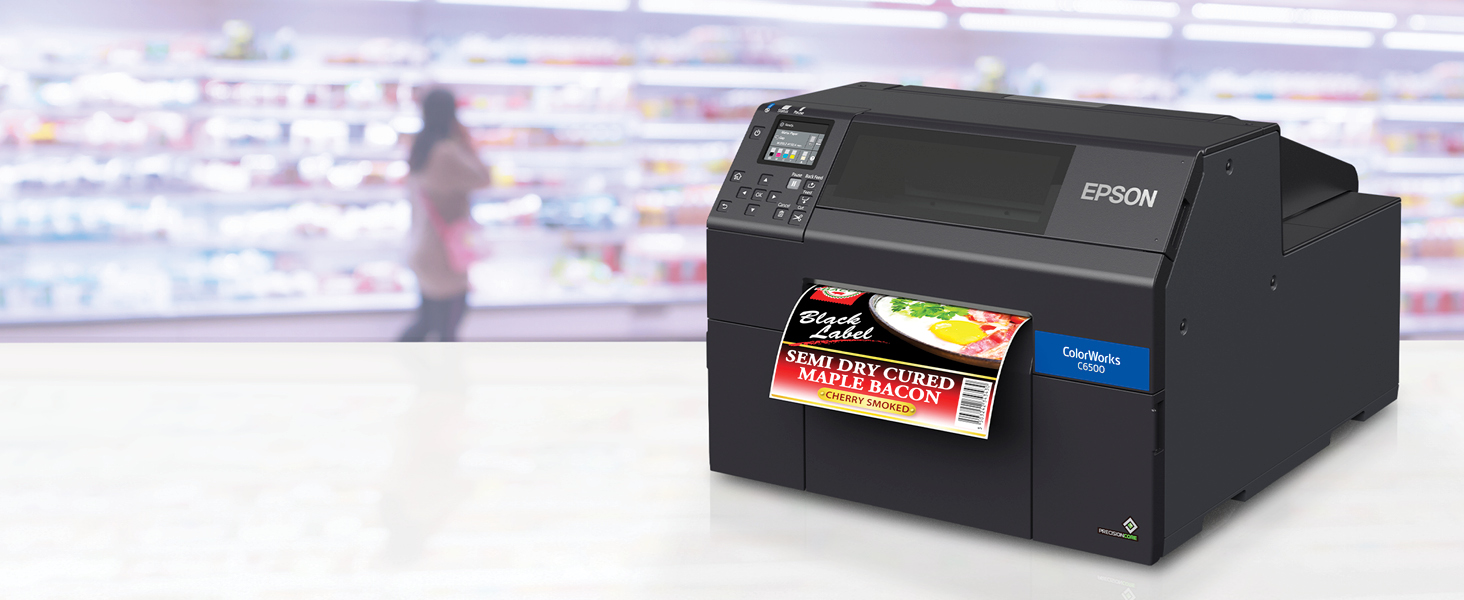
- An Epson ColorWorks C6500 Auto Cutter
- Ongoing technical support and supply coordination
This combination gave Summit Ridge the flexibility to print labels on site while using media engineered for the conditions those labels would face.
The company also consolidated its label and printer supply needs through C4. Instead of coordinating several vendors, the purchasing team had a single resource for label rolls, specialty materials, Epson consumables, and technical guidance.
Why Weatherproof Blank Labels Matter
Standard paper labels can be effective indoors. They are not the right choice for every oilfield application.
For outdoor drilling operations, weatherproof blank labels provide a stronger foundation for long-term identification. Synthetic label materials are designed to resist common sources of failure, including:
- Moisture absorption
- Curling and edge deterioration
- UV-related fading
- Surface abrasion
- Oil and fluid exposure
- Temperature-related performance changes
The correct label still depends on the surface and the application. A label placed on painted steel may require different adhesive performance than one applied to a plastic housing, tool case, or curved pipe.
C4 evaluated those variables before recommending the media. That approach helped Summit Ridge move away from simply buying the cheapest roll and toward selecting the most appropriate label construction for each use case.
Why Chemical Resistant Labels Were Essential
Oilfield equipment is exposed to substances that can damage both the label face stock and the adhesive.
A label may encounter:
- Hydraulic fluid
- Diesel fuel
- Lubricants
- Corrosion inhibitors
- Cleaning agents
- Drilling mud
- Solvents
- Water mixed with industrial contaminants
For those applications, chemical resistant labels offer enhanced protection against premature deterioration. Vinyl and other synthetic constructions can help preserve printed information when labels are exposed to splashes, wiping, and repeated handling.
The goal was not simply to make labels look durable when they were new. The goal was to keep equipment identification, barcodes, warnings, and operating information legible after installation.
That distinction matters. A label that performs in a clean office may fail rapidly on a drilling site.
+ The Printer Upgrade. Epson ColorWorks C6500 Auto Cutter
The media solved the durability problem. The Epson ColorWorks C6500 Auto Cutter solved the workflow problem.
Summit Ridge no longer needed to depend entirely on pre-printed labels ordered weeks in advance. Crews could print the required label when equipment, materials, or field conditions changed.
The Epson C6500A is engineered for demanding color labeling applications and provides:
- Up to 8.34 inches of print width
- Print speeds up to 5 inches per second
- Up to 1200 dpi resolution
- Crisp text and high-resolution graphics
- Precise barcode production
- Support for variable-length labels
- Built-in auto cutting
- Ethernet and USB connectivity
- Compatibility with ZPL II, Windows, Mac, Linux, SAP, and major middleware
- Pigment-based UltraChrome DL ink
- Support for synthetic, matte, gloss, PET, and other media types
The built-in cutter was especially valuable for field work. It allowed crews to produce individual labels without manually separating every piece from a roll.
A technician could print:
- Equipment identification labels
- Chemical container labels
- Inspection and maintenance labels
- Barcode and asset tracking labels
- Color-coded process labels
- Safety communication labels
- Pipe and valve identification
- Replacement labels for damaged equipment
The result was a more adaptable labeling operation with less dependence on pre-printed inventory.
The Compliance Advantage of Clear, Durable Information
In industrial environments, label durability supports more than appearance. It supports operational control and safety communication.
A label must remain readable long enough to serve its purpose. If a warning, chemical identifier, barcode, or handling instruction disappears after brief exposure to sunlight or moisture, the label is no longer performing its intended function.
The Epson ColorWorks C6000 and C6500 family can achieve BS 5609 certification when used with specified compatible pigment ink and approved media combinations. That certification applies to the tested printer, ink, and media configuration. It does not automatically apply to every label stock.
For this reason, C4 helps customers evaluate:
- The intended label application
- Required exposure resistance
- Substrate compatibility
- Adhesive requirements
- Print system compatibility
- Regulatory and safety communication needs
- Expected service life
- Cleaning and handling conditions
This application-focused process gives customers greater confidence that the selected solution is built for the environment.
+ The C4 Difference. One Supplier and Better Technical Support
The equipment and materials were important. The support behind them was equally valuable.
C4 Label Solutions offers an extensive product range for businesses that need reliable labeling without unnecessary complexity. Customers can source:
- Blank label rolls in numerous sizes and constructions
- Weatherproof and synthetic media
- Chemical resistant label materials
- Epson ColorWorks ink cartridges
- Maintenance boxes
- Printer accessories
- Specialty labeling supplies
- Technical guidance for application-specific requirements
For Summit Ridge Energy Services, consolidation reduced the burden of managing multiple vendors. The company could work with one knowledgeable supplier to identify the right stock, replenish consumables, and troubleshoot printing questions.
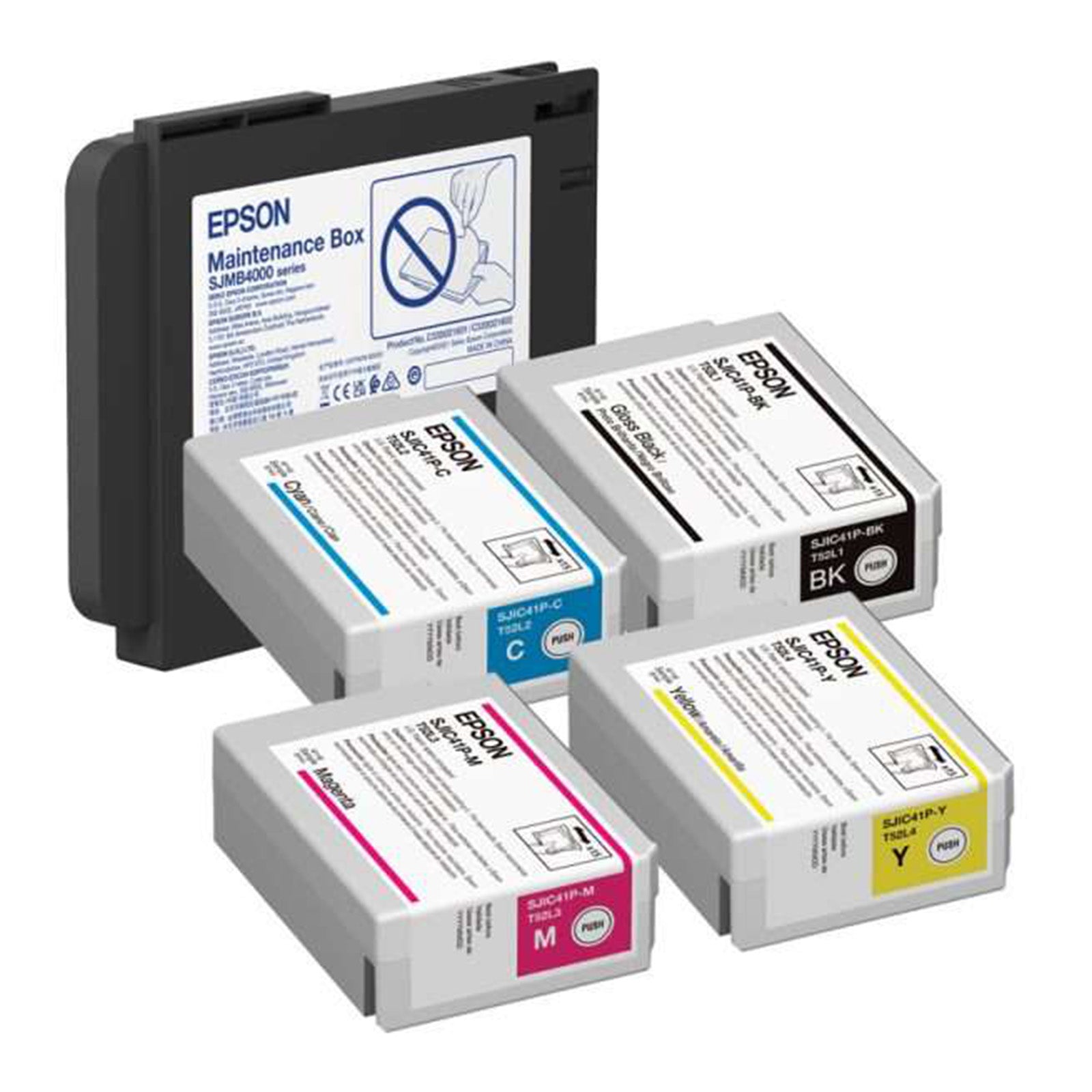
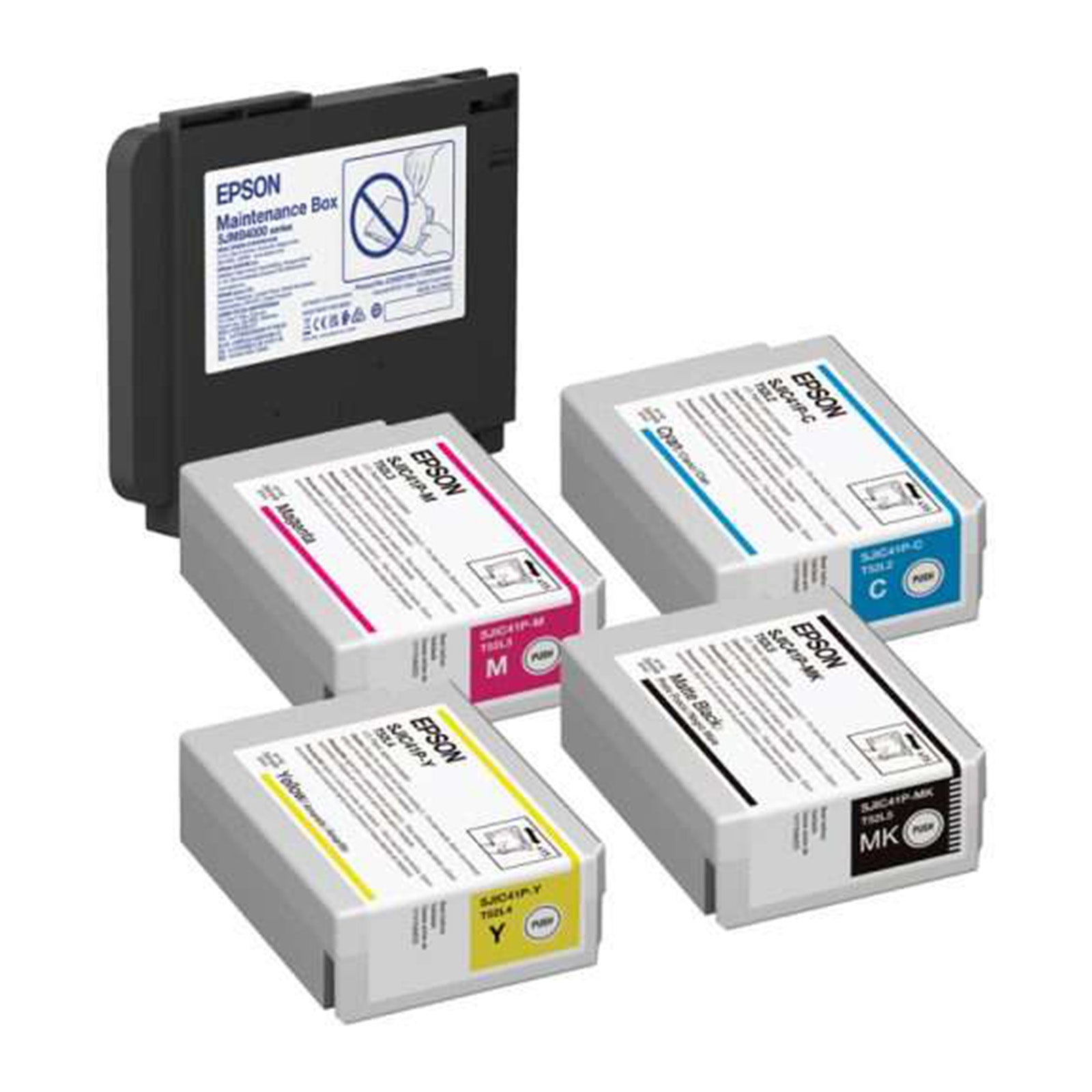
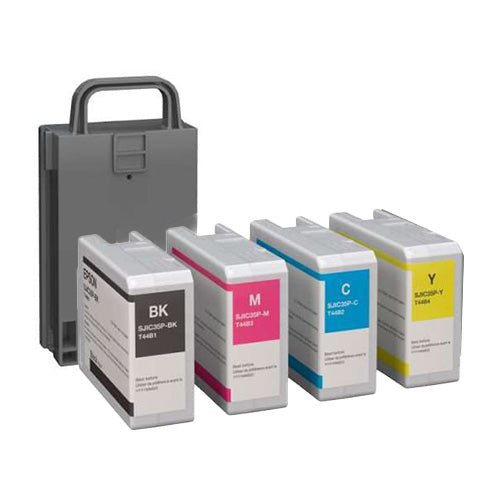
C4 also supplied compatible Epson C6000 and C6500 consumables, including pigment-based cyan, magenta, yellow, and black ink cartridges and maintenance boxes. The company’s Epson ColorWorks C6500A consumables collection provides a streamlined source for ongoing printer support.
That combination of product variety, competitive pricing, and dedicated technical assistance helped turn labeling from a recurring field problem into a controlled process.
The Result. Durable Labels When the Operation Needed Them
After implementing the new solution, Summit Ridge Energy Services had a labeling workflow designed around the realities of oilfield work.
The operation could:
- Print outdoor labels close to the point of use
- Use weatherproof media for exposed equipment
- Apply chemical resistant vinyl where fluid exposure was expected
- Replace damaged labels without waiting for a new pre-printed order
- Produce barcodes and color-coded identification on demand
- Reduce obsolete label inventory
- Simplify purchasing through one supplier
- Receive ongoing technical support from C4 Label Solutions
- Improve the consistency of field identification
Most importantly, the company was no longer treating label failure as unavoidable.
The right combination of durable label media, pigment-based ink, on-demand printing, and technical support gave its crews a stronger foundation for safety, tracking, and operational efficiency.
Oilfield labeling demands professional-grade performance. C4 Label Solutions delivered a solution engineered to withstand the environment and built to support the people working in it.
Is Your Labeling Process Built for the Field?
If your labels are fading, lifting, smearing, or becoming illegible outdoors, the problem may not be your printer alone. It may be the combination of face stock, adhesive, ink, application method, and environmental exposure.
C4 Label Solutions can help you evaluate the complete system and identify a better solution for your equipment, materials, and workflow.
Need labels that can take whatever your site throws at them? Call us at 713 828 4777! Or contact C4 Label Solutions by phone or email to discuss your requirements.